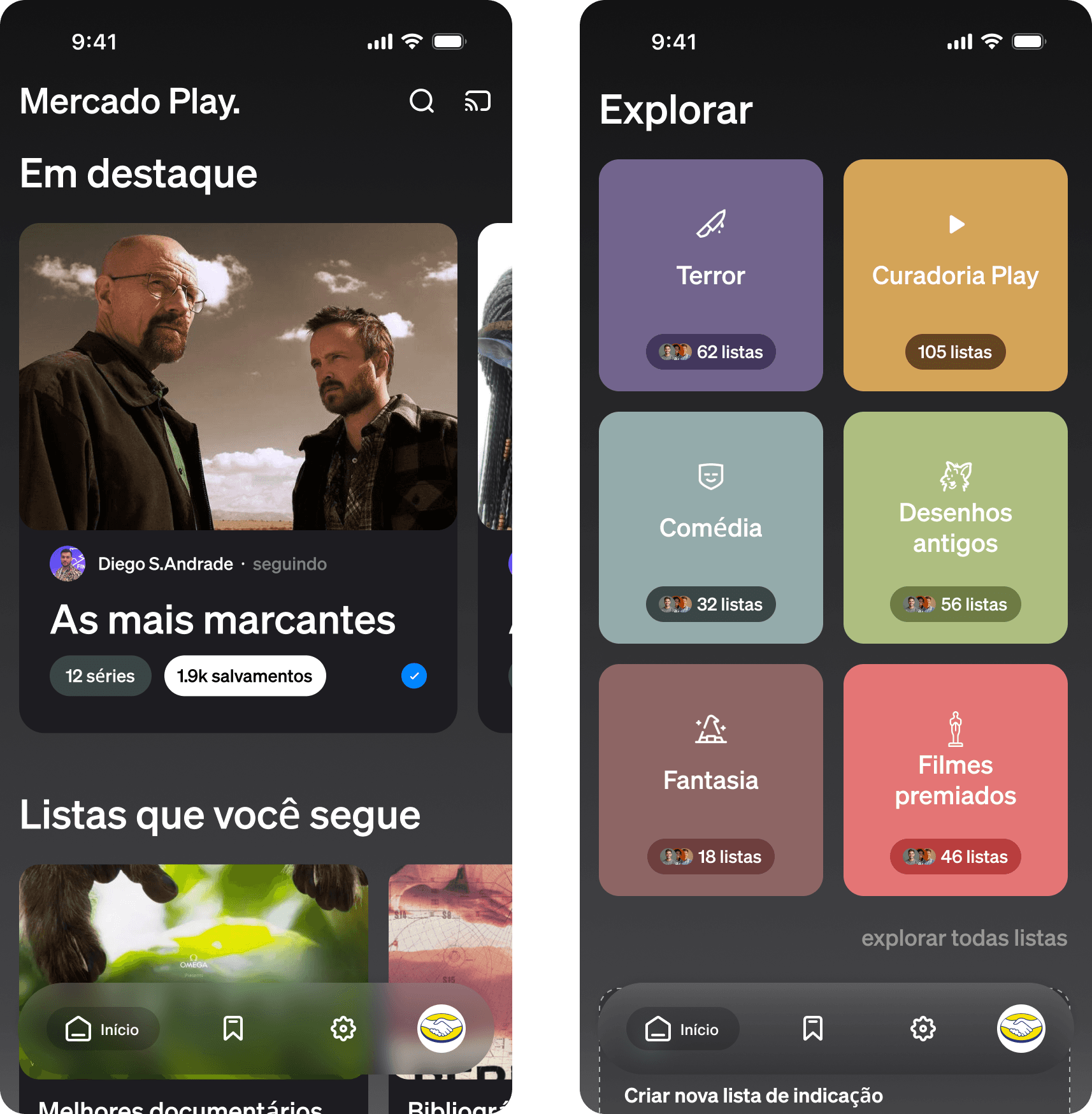
Indica
Recommendations from people who know you
Meli • 2026
My role
Senior product
designer
Duration
3 days
Key Activities
Product Design
Visual Design
Prototyping
Overview
Mercado Play is Mercado Livre’s free content platform, with a wide catalog of movies, series, documentaries, kids’ content, and reality shows available to the super-app’s base of over 100 million users in Brazil.
Last month, platform usage frequency dropped 4% compared to the previous month. In conversations with users, the User Research team identified a recurring pattern: recommendations between close friends and family — which already happen outside the app, on WhatsApp and in everyday conversations — have no place inside Mercado Play.
This case proposes the Indica feature: a human curation layer, based on lists created by real people, integrated into Mercado Play.
Disclaimer: Case that went through the technical assessment stage of Mercado Livre’s product design hiring process. As it is an exercise, all decisions are well-grounded but hypothetical. The outcome metrics presented at the end are projections, not real results.
Business goals
In a real scenario, I would align success metrics with stakeholders before designing. For this one, the main metric I used is monthly usage frequency/MAU, as reported in the briefing:
% usage frequency
Increase the average monthly session frequency per user (−4% last month)
Understanding the problem
The UX research team’s study brought 4 users representing distinct age groups and contexts. Instead of treating them as personas (4 is statistically insufficient), I grouped them by behavior patterns and, based on that, defined the following Jobs to be done:
01 · Not losing good recommendations in the chaos “I write it down on WhatsApp so I don’t forget (Carla, Andrés)”
02 · Trusting people who know me “I don’t follow strangers’ opinions (Virginia, Roberto)”
03 · Recommending without friction (implicit in every quote)
Based on this, we can assume the hypothesis that the problem isn’t Meli Play’s catalog, but the lack of a human curation layer integrated into Meli Play.
Current journey
Before designing the new experience, I mapped Mercado Play’s current journey to understand how users discover content, access titles, and navigate between recommendations and details. This analysis helped identify opportunities to integrate social recommendations into the existing experience, leveraging interaction patterns users are already familiar with and minimizing friction in the journey.

Solution hypothesis
To define and choose a solution hypothesis for this challenge in a structured way, I applied Teresa Torres’ Opportunity Solution Tree, considering the impact vs. effort of each one:
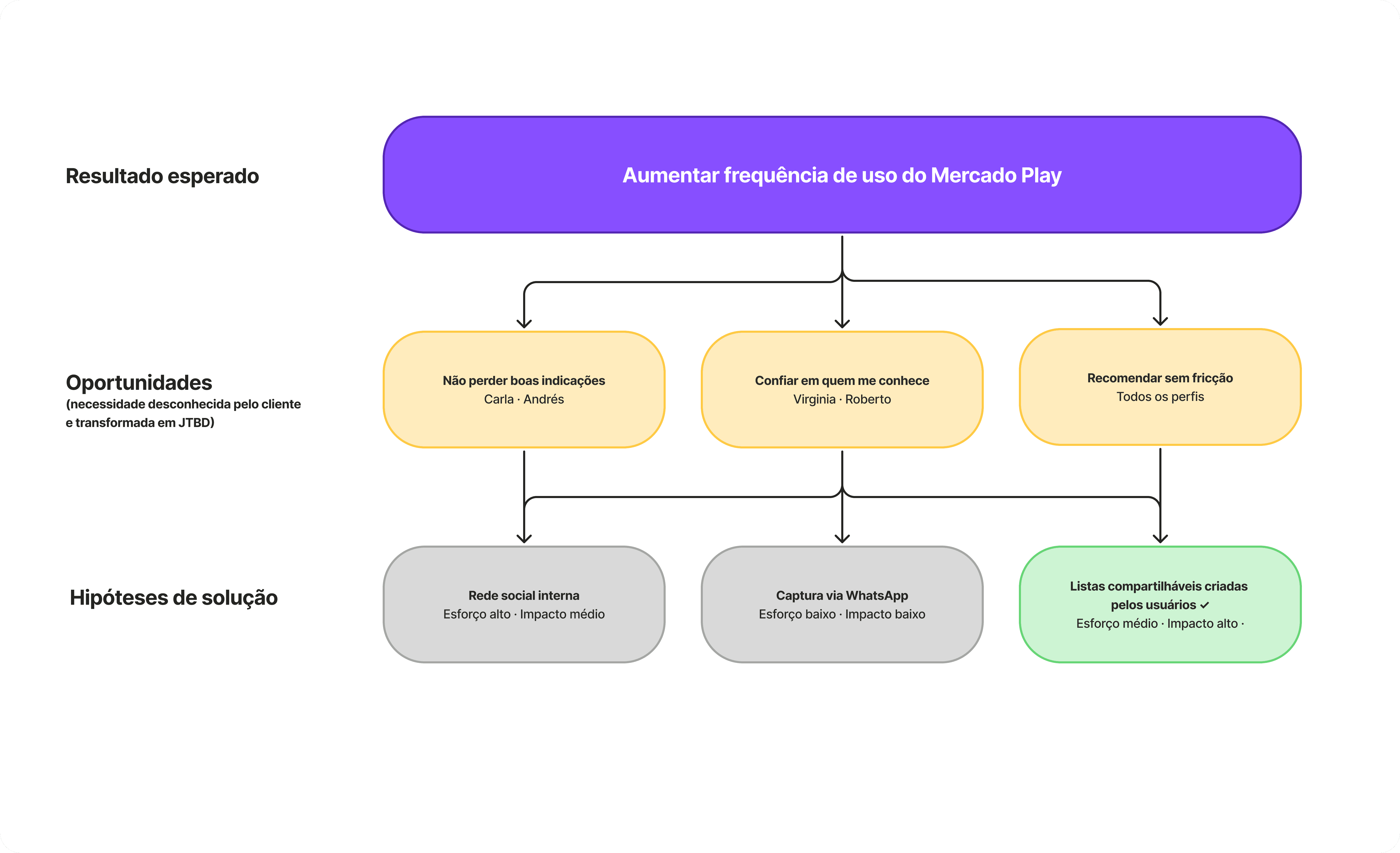
Based on this rationale, the best hypothesis was to move forward with Lists, which I named Indica: a human curation layer, based on lists created by real people, integrated into Mercado Play.
Architecture, taskflow and wireframes
Before the high-fidelity screens, I mapped the architecture, the taskflow, and the main rough wireframes. This gave me a systemic view of the journey, essential before moving on to the high-fidelity screens.


Benchmark and concept
To define Indica’s craft and visual design direction, I developed a moodboard with visual references from digital products.

The Indica journey
Below are the details of each of the main screens from the Mercado Play redesign integrated with the new Indica journey. I added notes to the screens to better justify some design decisions:
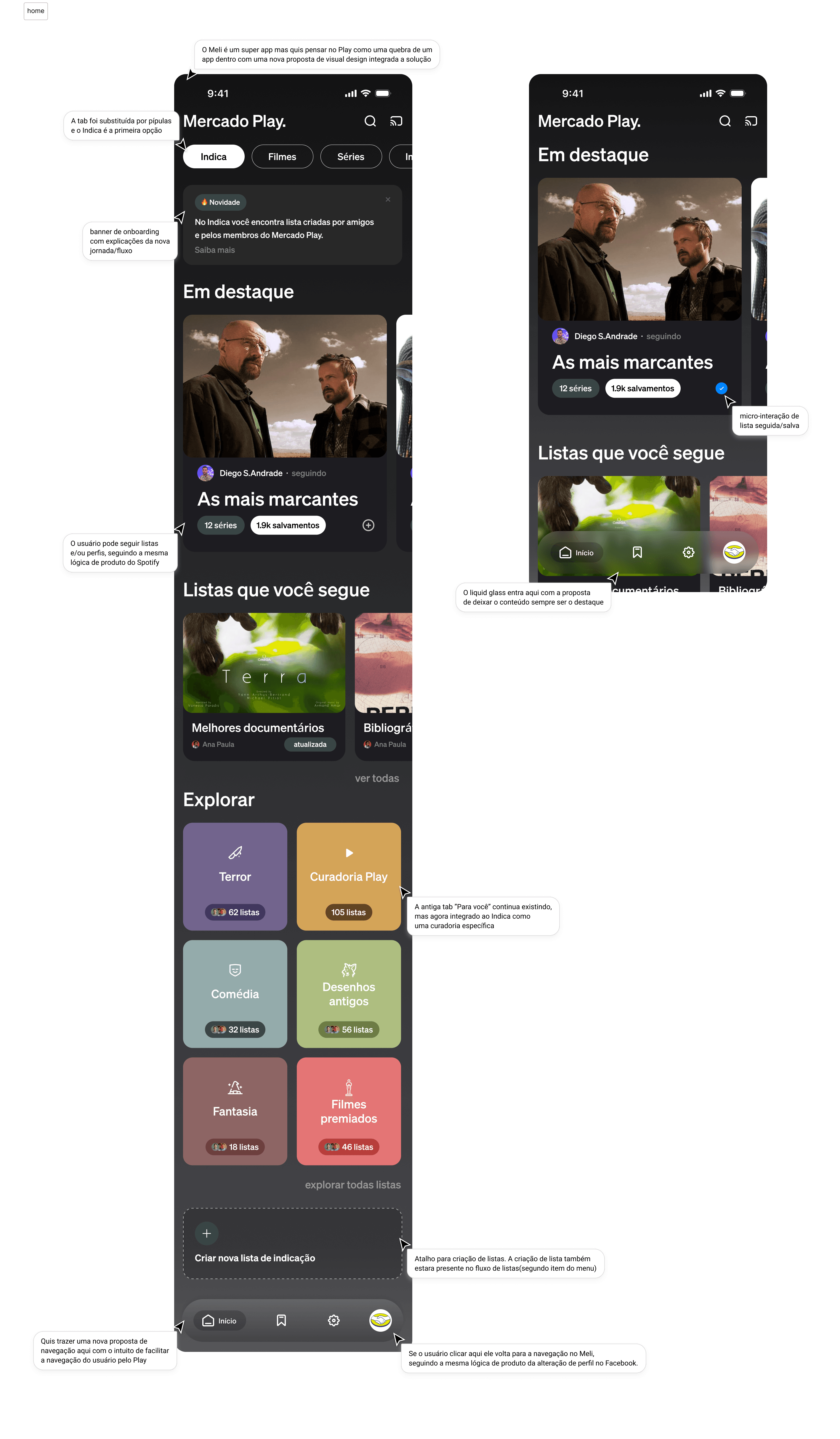
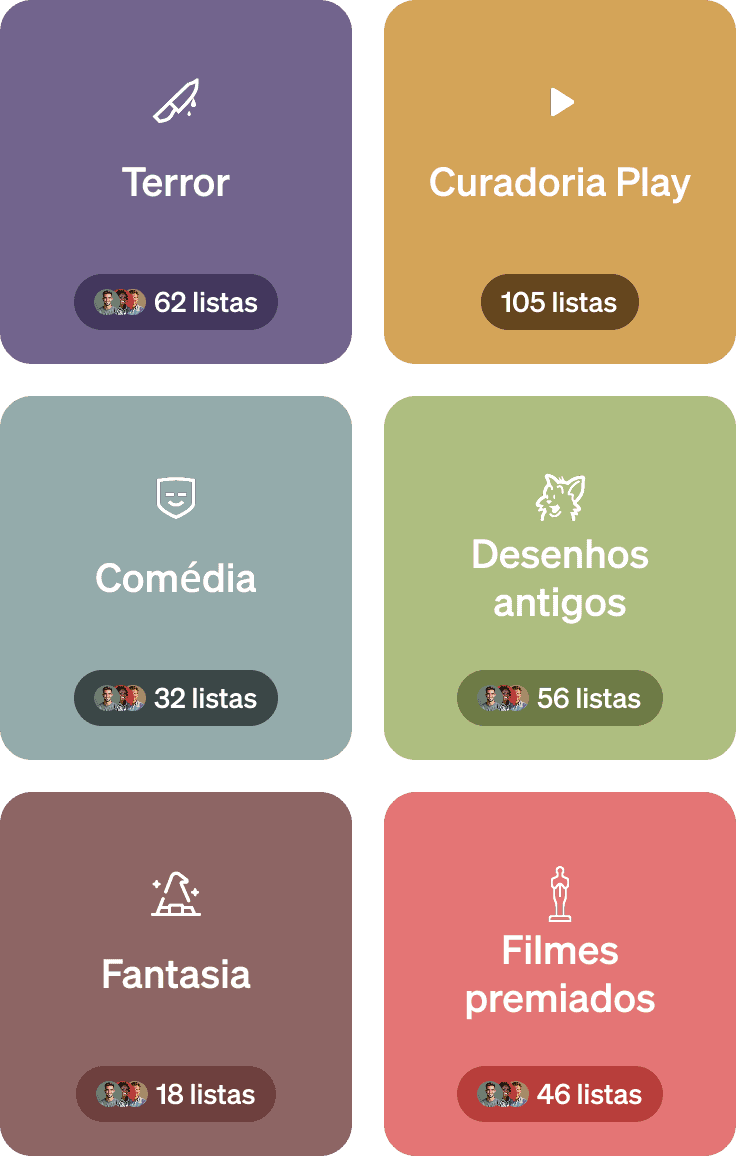
Play home with Indica

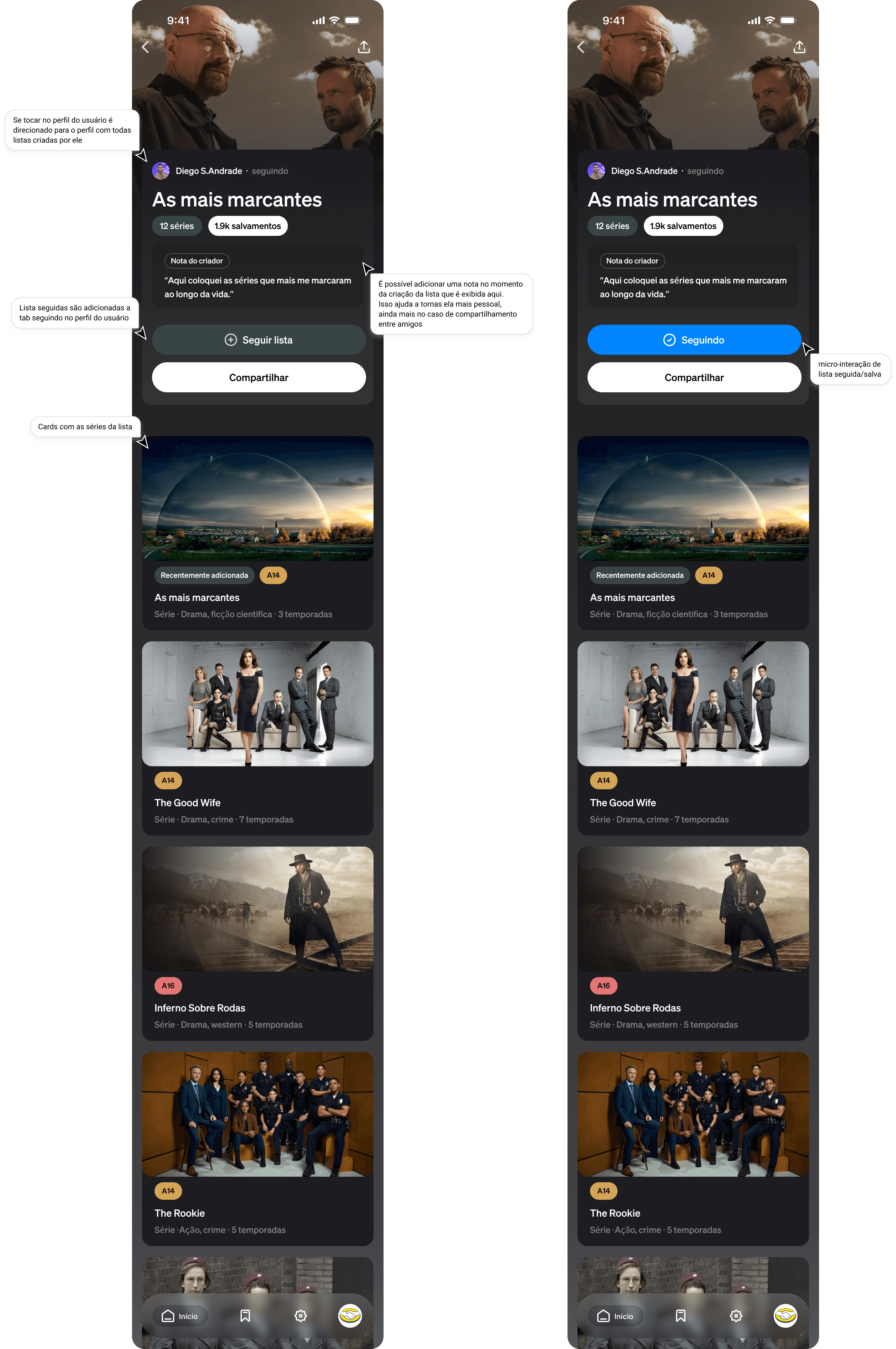
List detail
After selecting a list, the user sees its detail view. There they can follow the list, share it, and see its items.
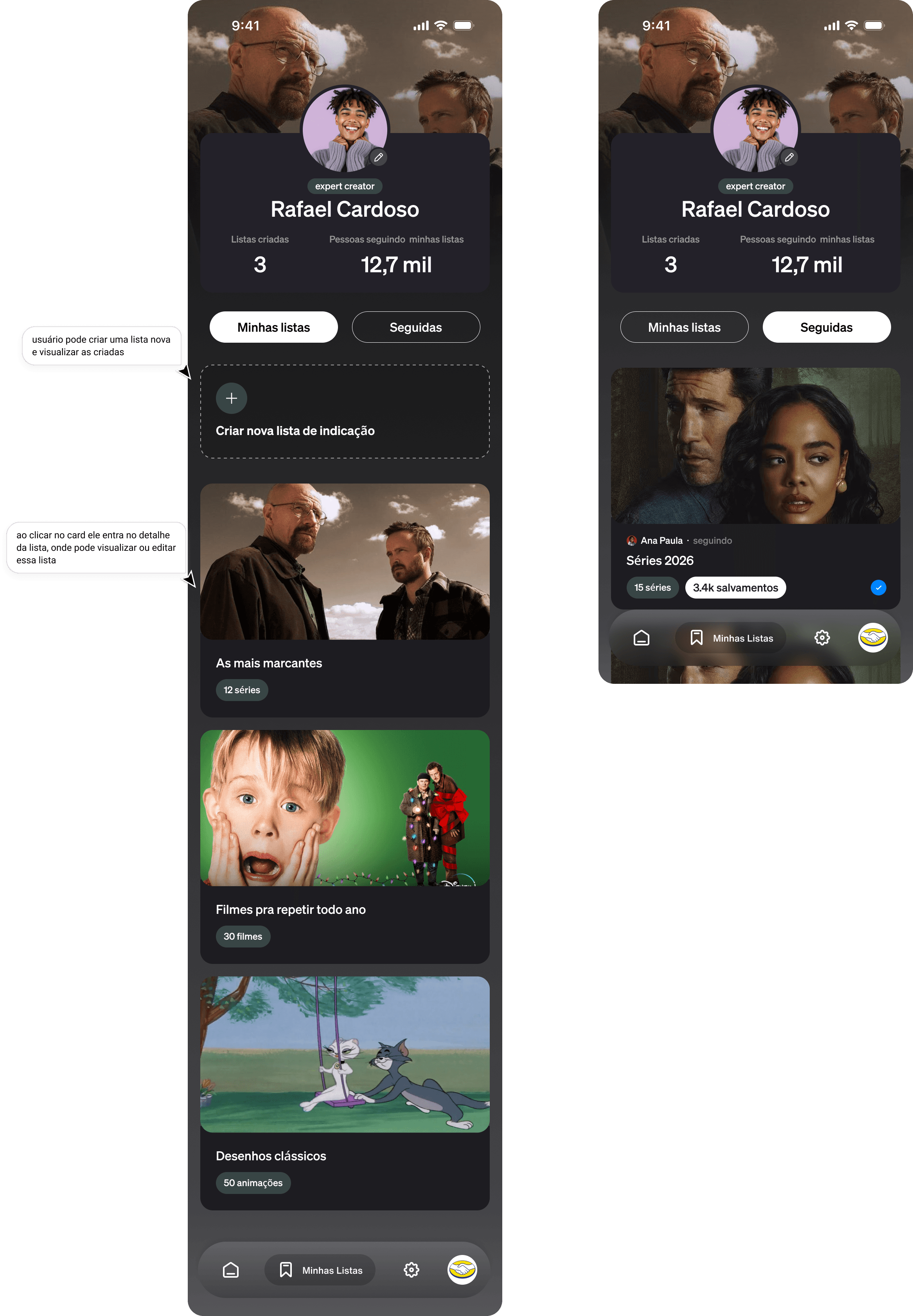
My lists
In my lists, the user can manage the lists they created, create a new list, or view the lists they follow

Settings
A flow that already existed but was moved to the menu to improve findability and ease of use.
Screenflow

Prototype
How to measure success
Based on the defined solution hypothesis, it’s important to measure whether we achieved the business goal after rollout, based on the performance of the following product metrics:
% plays via human curation
Percentage of plays originating from a list created by another user (vs. algorithm or catalog)
+
Active lists per user
Average number of lists followed or created per monthly active user
=
An 8–10% increase in usage frequency
Recovery of the −4% (back to the previous baseline) + incremental growth attributable to Indica
Lets’ talk.
book a call
diegoandradeux@gmail.com
© 2026 – Diego Andrade